By Leigh -
There are about 45,000 different known species of mites, but it is primarily the Northern Fowl Mite (Ornithonyssus Sylviarum), Chicken Mites (Demanyssus Gallinae) and the scaly leg mite (Knemidocoptes mutans) that are problematic for North American and European flocks. These tiny arthropods are in the tick/spider (acari) family. Like ticks, these external parasites feed on the blood of their host. Unlike ticks, they may also feed on the skin

Believe it or not, 95% of all avian mites are females, and in order to reproduce, they must have blood. In a hospitable environment, mites can start reproducing in only 7 days and can cover its host in up to 20,000 mites in just 9 weeks. While they will infest young birds, they tend to prefer birds that have reached sexual maturity. Unfortunately mites can also live up to 3 weeks without a host. This can make it very difficult to get rid of these creepy-crawlies!
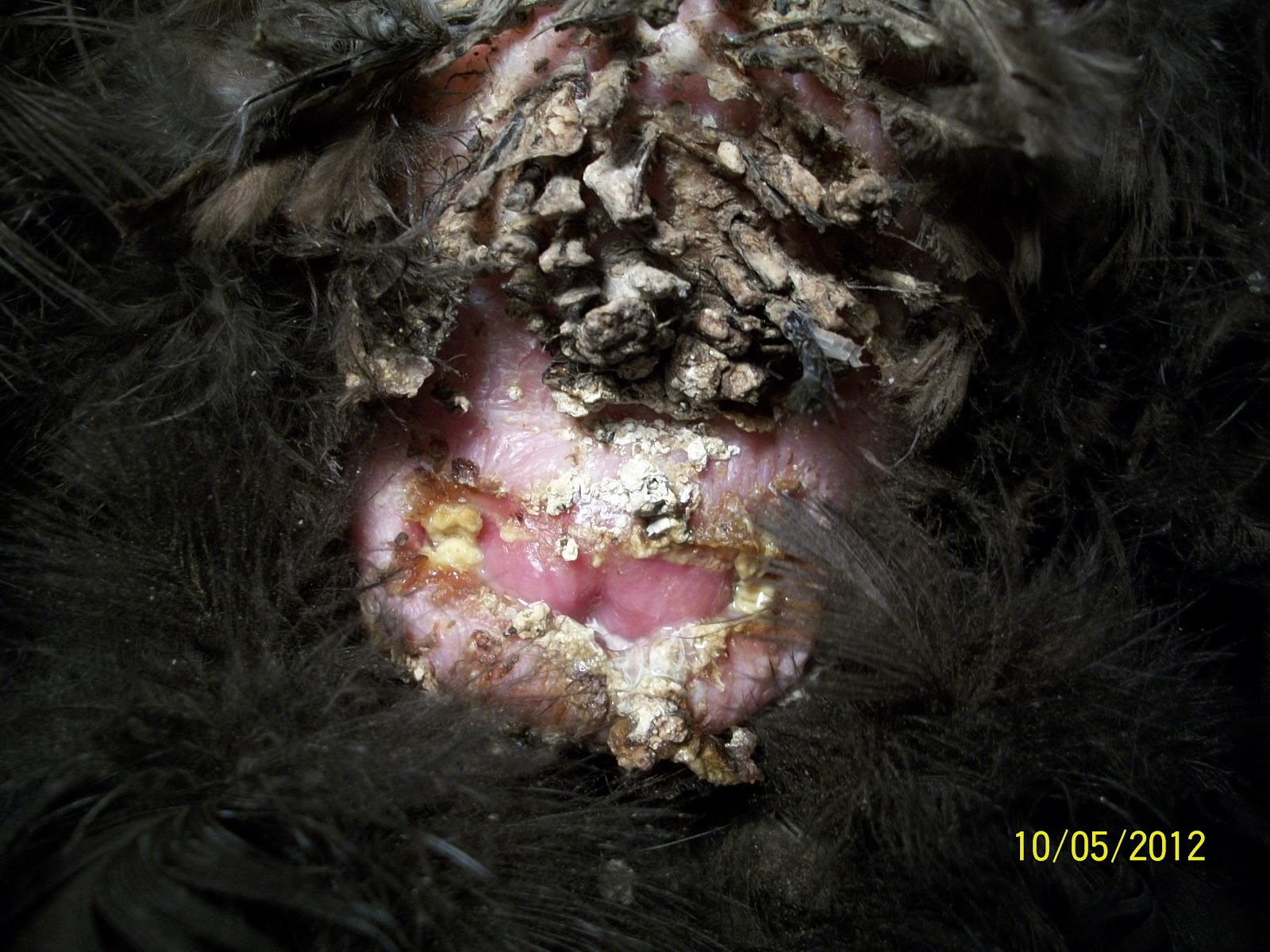
 The first place to look for Northern Fowl mites and Chicken Mites on your hens is around the vent. As the population grows, they will become more apparent on the tail, back and legs. Interestingly, mites tend to be more randomly spread out on cockerels and roosters.
 Prior to consuming blood, mites can be very difficult to see as they are rather transparent and roughly the size of a particle of sand. Once they begin feeding, they take on a reddish brown color. You will need a pair of keen eyes to spot these tiny villains, so if you have a difficult time reading small text, don your bifocals, grab a magnifying glass or get the kids to help check over your chooks.
A bad infestation can eventually cause poor laying in hens and anemia in birds of all ages and genders. Your chicken’s combs and wattles should be a bright red color (unless they are Silkies or other dark-skinned breeds). If the comb appears pink or gray, it is a sign of anemia.
In severe infestations of the Northern Fowl Mite, a black, sooty-like substance will become present at the base of feathers and around the vent. This substance is a combination of dried blood from your chicken and the excrement from the mites.
 Northern Fowl mites generally live on their host around the clock, unlike Chicken Mites which tend to leave their host during the day and crawl into the nooks and crannies in the wood of the coop, perches, bedding or nearby trees. If you see mites on your birds during the day, chances are they are Northern Fowl Mites. Both types may be present on your birds at night.
Note – mites will hide inside straw bedding. Straw is hollow, like a… well… like a straw (hence the origin of the drinking straw). Hay on the other hand is not hollow and therefore can not harbor these parasites in the same way.
Finding mites on your birds is not necessarily a result of poor chicken-keeping. These mites are carried in on many kinds of wild bird species. Of course there are ways to help prevent an infestation, like feeding plenty of fresh garlic to your flock.
How can you rid your birds of these mites? The best natural and organic remedy (in my opinion) is wood ash.
Dan Sullivan, soil scientist with the Oregon State University Extension Service explains, "When wood burns, nitrogen and sulfur are lost as gases, and calcium, potassium, magnesium and trace element compounds remain. The carbonates and oxides remaining after wood burning are valuable liming agents, raising pH… " (Source Link) These liming agents draw moisture out of insects, thereby killing them. Diatomaceous Earth works in the same general way – by drawing the moisture from the mites bodies and killing them. The differences are that many find DE harsher if accidentally inhaled, and for anybody with a wood-burning fireplace or stove, wood ash is free.
Scaly Leg Mites:
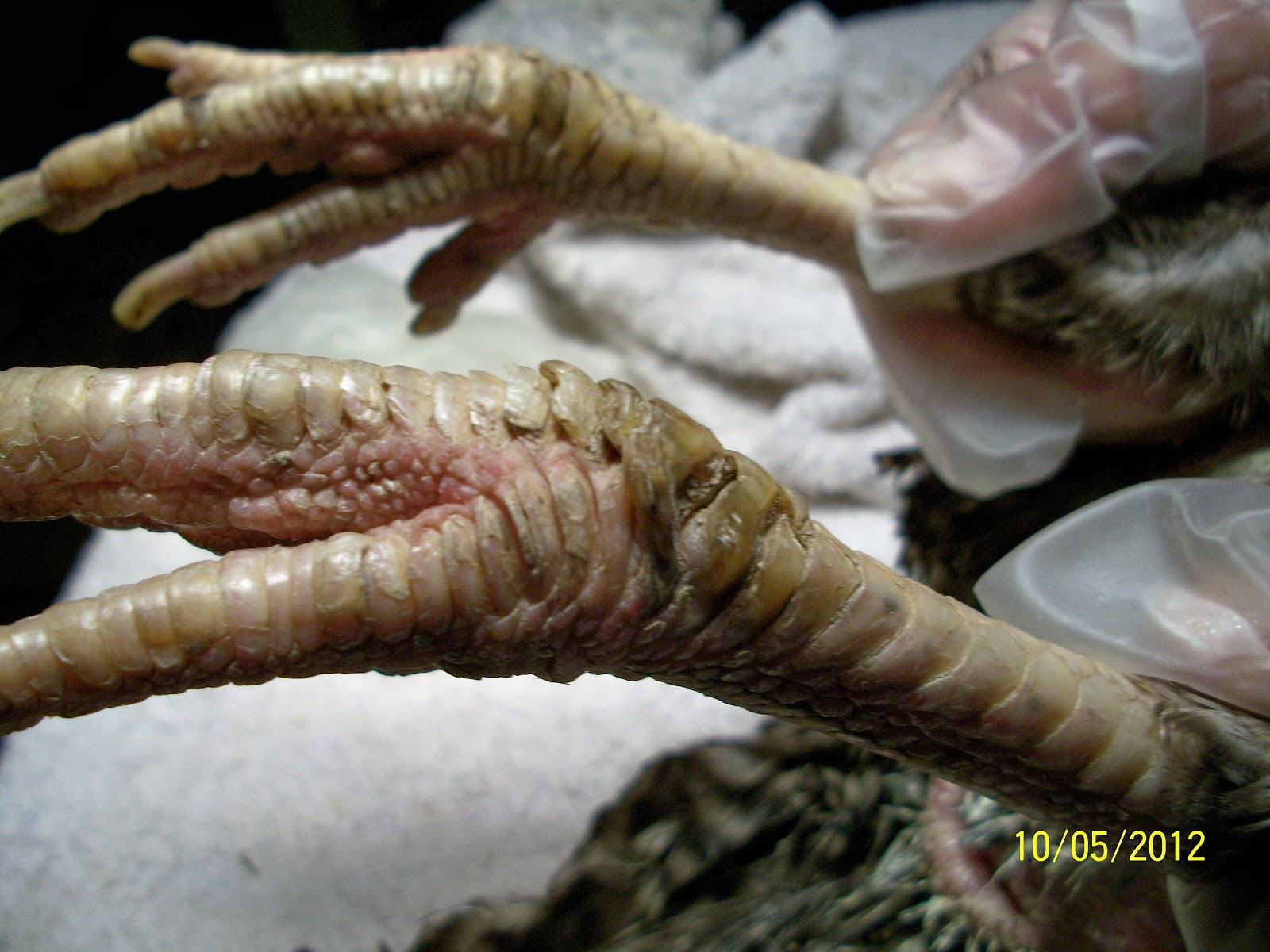
Scaly leg mites (Knemidocoptes mutans) spend their entire life cycles on the legs and unfeathered areas of their hosts. Unlike the Northern Fowl Mites and Chicken Mites, scaly leg mite infestations are generally a result of direct contact with other infested birds or from coops where infested birds have lived. The tell-tale sign of scaly leg mites is a rough-appearing leg with lifted scales.

A thick slathering of coconut oil, olive oil, Nu-Stock or petroleum jelly twice a week for 3 weeks will kill these mites by preventing air flow and suffocating them.
Your Coop:
To kill mites that may be hiding in the nooks and crannies of your roosts, coop and bedding, it is advisable to remove the birds from the coop and spray everything thoroughly with Neem Oil – an all natural oil available at most garden or feed supply stores. For bad infestations, bedding should be removed and burned, or at very least bagged in plastic and removed from the property as quickly as possible.
Need a good whitewash recipe? Here’s Pigeonguy’s Creepy-Crawly-Critter-Killing Whitewash Recipe (as found on our Recipes and DIY tab):
(Will help keep coops free of lice, mites and their eggs/nits/larvae)
In a five gallon bucket, mix:
- 1 gallon barn lime
- 1/2 box 20 Mule Team Borax
- Hot water till it is thin enough to paint with.
- 2 cups salt dissolved in hot water.
- Stir everything together
- Let set over-night (for at least 12 hours)
- Stir again add more water (if it needs it) to paint with.
Put on old, old cloths and a pair of safety goggles (not glasses).
Take a 6 inch paint or dry wall brush and slop the white wash on with a painting motion. Get it everywhere – roosts, in the cracks and all over the walls. No need to be neat - you will see why after it dries.
This should kill every creepy crawly critter in there. This is why out buildings were white washed back in the days – for parasite control and not for looks.
*** It should be noted that for the effective removal of mite infestations, the birds and the coop need to be treated all in the same day. Otherwise the mites missed in either area will simply jump back on to your chickens or back into your coop after one or the other has been treated. Remember – just a few little mites can turn into upwards of 20,000 mites in just 9 weeks.

- Leigh
Article Sources:
*