Minggu, 27 Oktober 2013

DIY Healthy Suet Cakes for Your Chickens (and other birds too)


By Leigh -
  
As most of you know, my birds generally free range from sunup to sundown every day. The other day my husband hurried into the house to tell me there was a hawk in a nearby tree. The crows were after it, which is a good thing, but it still put me on edge. Yes - raptors migrate in the Spring and Fall, so even if you never have trouble with aerial predators the rest of the year, it is wise to keep your eyes to the skies during migration season!

I currently have 4 broodies with 11 chicks between them (hawk bait)... and most of the chicks are already sold and waiting until I find someone with whom they can hitch a ride with up to the DC area.

Groan.
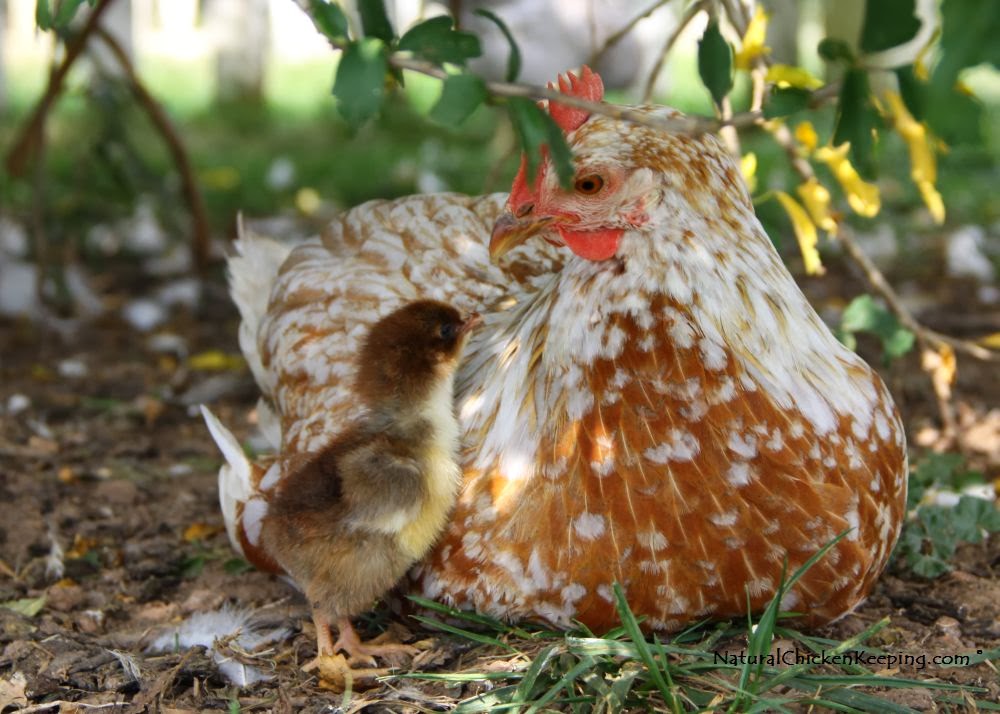

That night I grabbed my adult son and we went out after dark and played a game of "musical chickens." We put all the broodies and all their chicks into a single coop with a run, and locked them up... and haven't let them out since.

 (Hey - looks aren't everything. It's secure and it doesn't leak. :-)


ANGRY BIRDS have nothing on these hens and their babies! I get the nastiest looks and have to take drastic measures to prevent escapees every time I open the coop to give them feed or water. (I had the net out twice just today to round up runaways.)


So - while normally these birds would find all kinds of bugs and plants to feast upon throughout the day while free ranging, now I need to supplement their diets with as much of the "next-best-thing" as I can. I also need a boredom-buster for these birds that are so used to running and playing the day away in freedom.

I have found home made Suet Cakes to be a great solution!

By making your own suet cakes, you can customize the mixes based upon your birds' biggest nutritional needs. When hung in a suet cage, a mesh onion bag or just by a rope wound about it, it gives the babies and their mammas a fun family activity. So far these suet cakes have proved to be even more entertaining for my chickens than lining up along the run fence to glare at me as I walk by...

I also happen to have chicks in a brooder. These chicks have never free ranged, but they also need the vegetation and meat protein to insure their health.

So - first pick your ingredients based upon what your birds need most. If you are simply making these to feed wild birds, you can use packaged wild bird feed. For this batch (which I made for my chickens) I used:
  • Fresh young clover (harvested from the chicken yard)
  • raw chicken liver (um... not harvested from the chicken yard in this instance)
  • Squash seeds (natural wormer)
  • Old fashioned oatmeal
  • Dried meal worms
  • Scratch grains
  • Chick starter feed
  • Garlic (great for health and deters external parasites)
  • Oregano (natural antibiotic properties)


I simply used my judgement to determine percentages. You want to think about how much of what they would be eating while free ranging. Lots of clover and vegetation and plenty of bugs! I also use their regular feed as a filler. I use "treat" foods (scratch) very sparingly.

Add more meat protein for molting birds or more vegetables and grasses for your non-free ranging flock.


Yum - just look at those delicious worms! When you pick out your ingredients, think of these suet cakes as a health supplement more than a treat or dessert. 

You also need suet... thus the name "suet cakes..."

If you have a local butcher, you can ask for waste suet. Many of the larger chain grocers won't give it (or sell it) to you because they can't sell anything unfit for human consumption... even if you swear up and down no humans will be consuming it... but sometimes nice people will help you out anyway.

If you can't get super cheap or free suet from a store, just save all the grease from cooking meats. I save the drippings from hamburgers when I cook on our George Foreman Grill, and when I brown ground beef in the skillet to make tacos. I put it in a container and keep it in the refrigerator until I'm ready to use it. If it will be more than a few days, go ahead and freeze it to preserve freshness!


Many folks are against using plastic - and I'm not a big fan, but this was what I had available the other day.

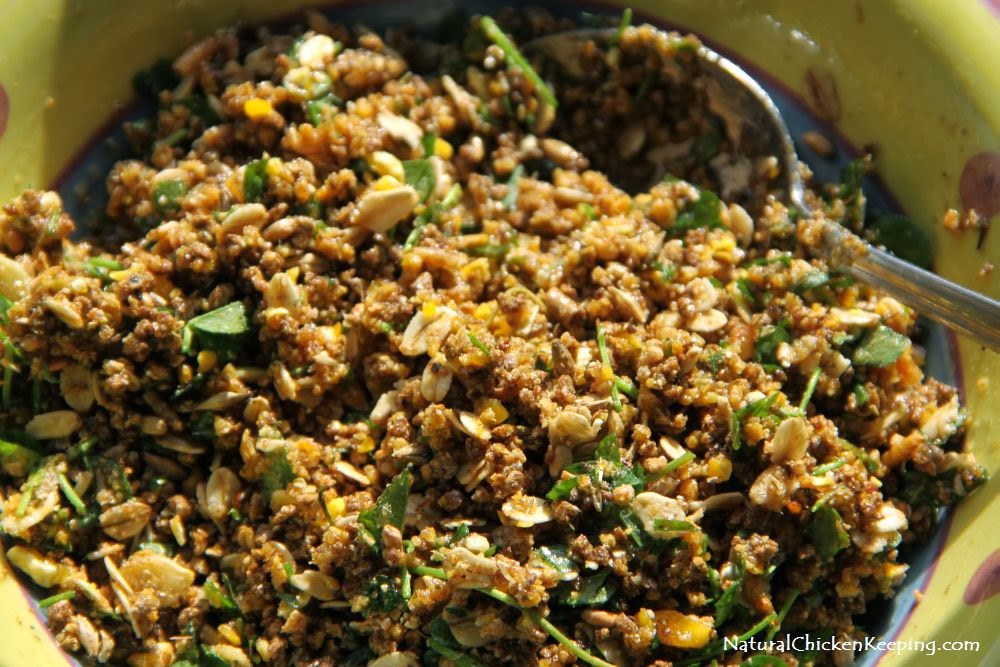
When you are ready to make suet cakes, just heat the now solid suet up until it is liquid, and start adding in your ingredients.


Add in dry ingredients a little at a time to test consistency. You don't want the mix to be too dry or it won't hold together. On the flip-side you don't want too much suet or your creation will look more like bumpy soap than something delicious.


Now you need a mold. I had these cute little (and horribly under-used) heart pans from a project I did with kids. They work great and the end result fits neatly into a smaller-size suet cage.


But you can also use just about anything else you have about the house...

 Just don't bring these to your kids' school bake sale!

You can even use old boxes lined with tinfoil or parchment paper or anything else that seems a good size and shape for your needs.

Unless I am lining my molds with foil or paper, I do grease them to help the hardened suet cakes slide out easily.

Then, just seal them up and pop them into the freezer for an hour or so. 


Once the suet has had time to harden, you can remove the cakes from the molds, reseal them and put them back into the freezer until you are ready to use them. All your fresh ingredients and meat will stay fresh this way, too! 


I put one in the indoor brooder and it took no prompting for the chicks to go to work on their new treat!


Creating your own suet cakes is so easy, and your flock will thank you... even if they are still covertly plotting your untimely demise for locking them up.

Get creative. These suet cakes can also make great gifts for your chicken (and wild bird) loving friends. 

(And though I would have loved to have been able to post a photo of my cooped broodies and their chicks enjoying my suet creations, when I opened the coop a crack in an attempt to get the shot, all I got was a blur of angry beaks and feathers flying directly at my camera lens in their frenzy to escape... sorry.)

And do you know what else make great gifts for your chicken-loving friends this holiday season?

How about Lisa Steele's new book, Fresh Eggs Daily? See This Post for more book details and to enter (you have just a few hours left) for a chance to win a copy!

And how about Sarah Rosedahl's adorable book, Chicken Breeds A to Z? Keep your eyes out - we'll be giving a copy away in the next few days!

Chicks dig it!

- Leigh
  
http://www.tillysnest.com/2013/10/down-home-blog-hopnumber-61-fall-cape.html?utm_source=feedburner&utm_medium=feed&utm_campaign=Feed%3A+TillysNest+%28Tilly%27s+Nest%29


From The Farm Blog Hop 

*****************

Selasa, 22 Oktober 2013

Unclear Gender/Sex? Is My Chicken an Hermaphrodite? The Story of the Gynandromorph Chicken

She looked like a pullet... up until she didn't look like a pullet. But now she doesn't quite look like a rooster, either. What is going on?? At first this chicken's gender was very unclear!


Scientists believe that Gynandromorphism in chickens happens when two sperm fertilize the same egg. It is somewhat rare, happening in 1 of every 10,000 chickens. If you meet enough chicken people, sooner or later you will hear tales of a chicken of questionable sex. And as it so happens, you are currently reading a story on a blog of someone who has a Chicken Of Questionable Sex... so we'll just call this chicken "Coques" for now.


Meet Coques:


Showing his/her girly side. No - I mean really. This just may be the female side of the bird!

As of the writing of this article, Coques is about 23 weeks old. As you can see, s/he has no noticeable saddle feathers. If you look closely, you can see that the tail feathers on this side are rounded, set at an angle and quite pulletish. But look at the tips of the tail feathers you can just make out on the other side... they are sickle feathers!


Can you see the difference?

I knew there was something different about this bird from early in his/her chickhood, but at that time I just thought him/her to be a special needs chick, and that perhaps it had experienced incubation issues and lack of proper nutrition with it's original owner (who fed it low-protein layer feed for it's first couple months of life).

One of the first things I noticed was that s/he was lopsided. Yes - the tail goes to one side, as does the neck, and it runs in the goofiest, klutziest manner I've ever seen.

 Yes - the tail always leans to the left... probably because of the different kinds of feathers coming in on each side.

 Here is where you can actually see a color difference between the two halves of this bird. This difference would be much more pronounced in unmottled breeds where the roosters have different color plumage than hens. Is that cool or what?

I likely would have given this bird away to a pet home had it not been for his/her endearing personality. S/he is by far the friendliest chicken I have ever had.


Yes - this is the chicken that dutifully oversaw my recovery from wrist surgery, and that runs up and right into my hands the moment I step foot outside. No - I never gave him/her treats to teach this behavior... s/he just loves to be cuddled.

Now just for comparison purposes, I'm going to share photos of Coques' full sister (same mother and father). We'll just call this bird "Grace."


 Grace

 Grace (left) and umm... Disgrace... (right)

 Grace - being graceful.

Coques - being "squawkward."

I don't know how Coques will change as s/he gets older. It will be interesting to watch his/her development to say the least. I also don't know how this condition might suppress hormones. While Coques does have sickle feathers coming in on his/her male side, there is little development of either saddle feathers or hackle feathers (at this time). S/he does have a few shiny mahogany feathers here and there (a male trait) but they are few and far between.

  For comparison: Mace is Coques' half-brother (same father), and just 10 weeks older. You can see how noticeable the saddle and hackle feathers are on this roo.

 Coques hatched without a toenail on the female side foot. I don't know if this has anything at all to do with the gynandromorphism or if it was an incubation issue.

There are two forms of gynandromorphism - bilateral gynandromorphism and mosaic gynandromorphism. In bilateral gynandromorphism the body is divided neatly in half - one full half of the body will express features from one gender while the other half of the body expresses features of the other gender. 

Mosaic gynandromorphism expresses more like a patchwork quilt with different areas expressing gender-specific features over the whole body.

(I don't know for sure if Coques is a bilateral or mosaic gynandromorph - perhaps time will tell.)

Both kinds of gynandromorphism happen while the developing embryo is at the very first stages of cell division. It only occurs  in birds, crustaceans and certain insects - mammalian hormones do not allow for the body to develop in a gynandromorphic  manner, but a similar condition called Chimerism does affect mammals in very rare cases.


 As for now, Coques is smaller than other chickens his/her age (even the Silkies). It is likely s/he may never lay an egg or crow, although it is possible s/he could do both. Needless to say, I will not be using him/her in my breeding program, but if s/he stays as friendly as s/he has been up until now, s/he will have a forever home with me!

For more on gynandromorphism (and to see some really striking photos) see:


*Chicken names have been changed to maintain privacy

Minggu, 13 Oktober 2013

The Amazing Scavenger Hunt-n-Peck with Awesome PRIZES!

If you love to hunt and peck as much as your chickens do, if you would love a GREAT new book on wholesome, all-natural ways to keep your flock healthy and happy, and if you might be just a wee bit competitive, then get ready to have a blast!

Our friend Lisa Steele of Fresh Eggs Daily has offered up a signed copy of her new book Fresh Eggs Daily: Raising Happy, Healthy Chickens... Naturally to the First Place winner of this scavenger hunt-n-peck!


If you are already a fan of Lisa's blog then you're probably already excited about the release of her new book. We at Natural Chicken Keeping are big fans of FED!! I have told Lisa before that while Fresh Eggs Daily is the "Gingham & Lace" chicken keeping blog, Natural Chicken Keeping is the "Torn Denim and Old Shoe Leather" blog. Yet we both have the same goal - spreading the word about all-natural methods of raising chickens. 

We're hoping that as soon as Lisa's life settles down a bit following the release of her book we'll see her out on our ever-growing Natural Chicken Keeping Forum, sharing her great chemical-free advice, recipes and creative ideas. You'll come see us, right Lisa?

Our Second Place contestant will receive a brand new 12 oz. tube of Nu-Stock Ointment!


OK - enough small talk! Ready??


Mandatory Scavenger Hunt-n-Peck Tasks to Enter:

*A* To officially enter the Amazing Scavenger Hunt-n-Peck, "peck" the leave a comment button on this blog post and comment with only your first name (or preferred user name) and the number of chickens you currently have. (The number doesn't have to be exact.) This will be your game ID.
My own entry would look like: 
Leigh 58 
or if I didn't want to share my actual name publicly:  
Bulldogma 58


*B* Natural Chicken Keeping has an Article Index page. Using our Article Index, find the article that would answer your questions about how much coop and run space you need for your chickens. Leave a comment with your game ID on that post simply stating you were there. Mine would say:

"Leigh 58 was here" 


*C* To prevent the lazy folks from simply copying the answers that other people post, I will have you email me answers to the following at shabbychicken@hotmail.com. Copy & paste the following into your email with your answers

<Start Copy> 


  • 1) Natural Chicken Keeping has a Forum where people can share all-natural chicken keeping tips as well as recipes, coop designs, crafts, gardening tips, classified ads and more. Under the heading "Coops, Barns, Runs, Yards & Building Projects," which user posted the topic: "hoop pens, modular designs & more?"
  • (Answer)
  • 2) Who wrote the article on the Natural Chicken Keeping Blog with the title, "Benefits of Lacto-Fermenting Feed for Chickens?"
  • (Answer)
  • 3) Which blog will be doing a book review of the book Fresh Eggs Daily: Raising Happy, Healthy Chickens... Naturally on October 21st?
  • (Answer)
  • 4) What is the first advertisement to appear on the top right side of the Fresh Eggs Daily Blog? (It's just under the header.)
  • (Answer)
  • 5) Natural Chicken Keeping is not the only blog hosting the Fresh Eggs Daily blog tour this week. What non-chicken animal is pictured in the header of the other blog hosting the tour and a book giveaway this week?
  • (Answer)
  • 6) Specify any optional "Extra Entries" from the next section in the following manner:
    • +1 Entry - Liked FaceBook page & commented as (your FaceBook account name)
    • +1 Entry - Following NCK Blog as (user name)
    • +1 Entry - Joined NCK forum as (user name)
    • +1 Entry (Each share) - Shared blog post on (link(s) to sources)
<End Copy - Go Paste!>

Earn Extra Entries (Optional):

  • If you have a FaceBook account, "Like" the Natural Chicken Keeping Page and leave a comment with your game ID (Example: "Bond 007 was here.") Let me know in your email entry what name you are under so I can verify your "Like."
    (+1 Entry)
  • "Follow" the Natural Chicken Keeping Blog via the "Join This Site" button or the "Follow by Email" selection. Let me know in your email entry what name you are under so I can verify you are a NCK Blog follower.
    (+1 Entry)
  • Join the Natural Chicken Keeping Forum. Let me know in your email entry what user name you joined under for verification purposes.
    (+1 Entry)
  • Share this blog post - FaceBook, Twitter, Your Blog... (+1 Entry) for each verifiable method of sharing!


~~~~~~~~~~~~~~~~~~~

The first 10 email entries I receive will get a (+1 Entry) automatically! 

A First Place and Second Place winner will be randomly selected from all the entries with correct responses received by 11:59 P.M. on Monday, October 28, 2013. I will be going through to verify the winning contestants have completed ALL Scavenger Hunt-n-Peck tasks correctly. All mandatory tasks must be completed to win.


***


Visit all the other stops along the Fresh Eggs Daily Blog Tour to read some more great reviews and to enter for more chances to win a copy of the book!


Week One